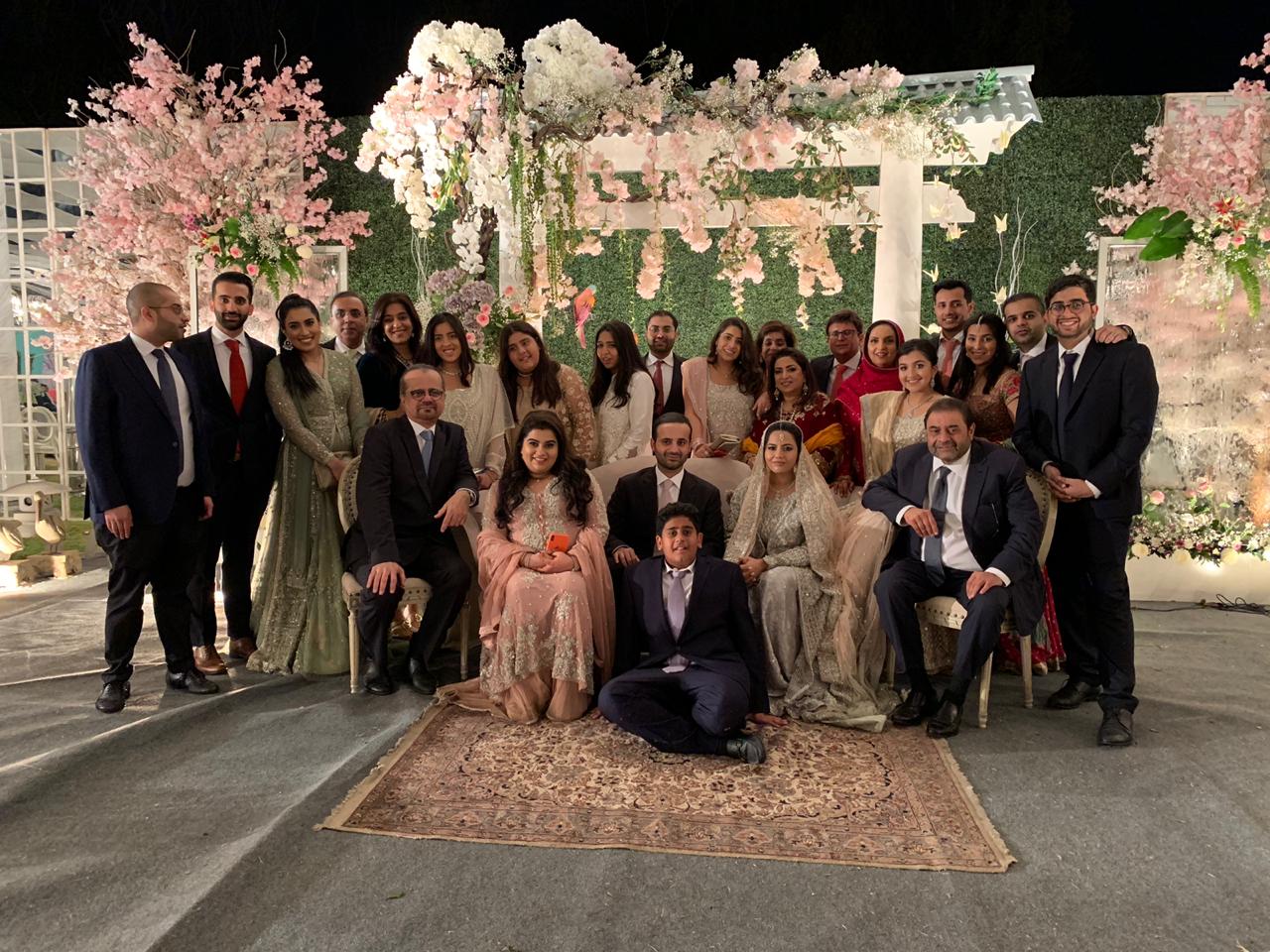
The big final event of the Pakistani wedding is the valima. This event is the wedding reception where the bride and groom enter together as an official married couple. The valima is an event hosted by the groom’s family to celebrate the first night the bride spent with her new family. The bridal outfit and jewelry is given to the bride from the groom. Traditionally, the grooms family chooses the outfit and jewelry and don’t let the bride have a say, but in recent times the groom’s family gives the bride money and they could buy the outfit themselves within the budget.
Valimas are usually grand and people are dressed extremely formal.
Family photos are usually held at the end of the function
The nikkah is the main part of the wedding which is the part when the bride and groom are actually getting married. This is where they seal the deal and the bride goes away to her new family. Both sides of the families come to the nikkah with a maulvi (Islamic priest) to represent both sides of the families. The nikkah is a contract between the couple where they consent their bond to each other. At a nikkah you are required to have an officiator and 2 witnesses.
Usually, nikkahs are a small event where you just invite the immediate family and follow the event with a dinner. Depending on the family, nikkahs are done at home or at a mosque. The nikkahs at a mosque are segregated and once the nikkah is over the husband is allowed to see the bride. The bride’s face is usually covered with veil and it is only removed by her husband after the nikkah is over.
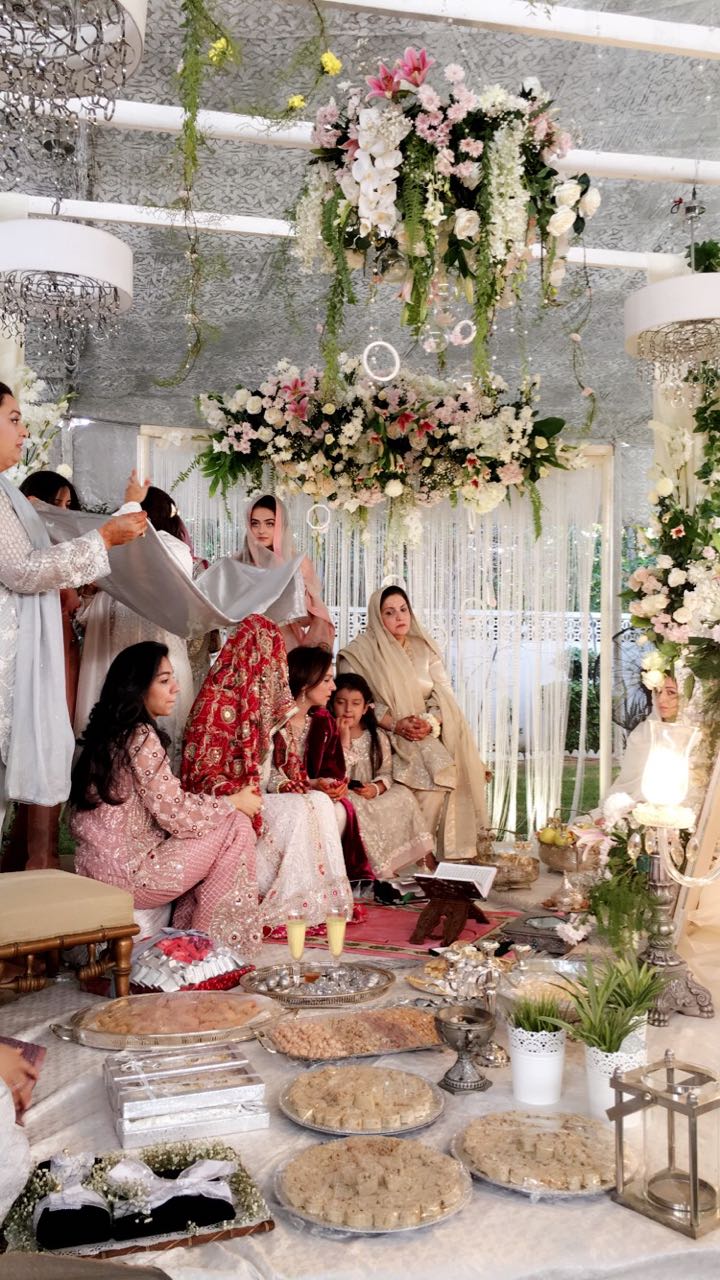
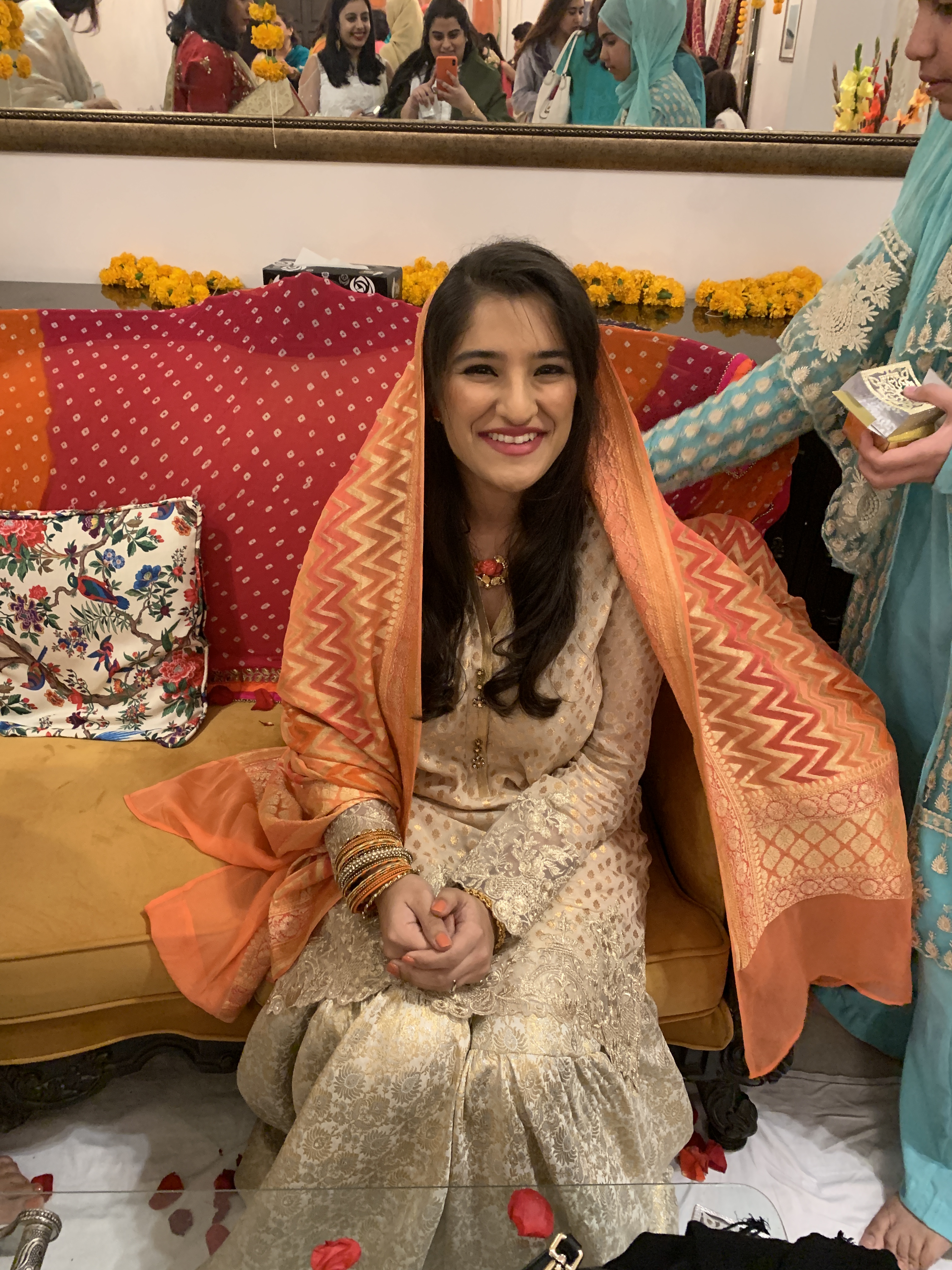
Aarsi Mushaf Dikhana, also known as the munh dekhai is a ritual of “showing of the face” after the nikah ceremony. An embroidered shawl is generally held over the couple’s head and they are supposed to see each other in the mirror and the bride shows her face that is covered during the nikkah. The bride and groom share a piece of fruit and family and friends congratulate the couple and exchange gifts. Badam ka Sharbat (almond sherbert) is served to the guests.
Nikkah Ceremony
My favorite type of nikkah is the Irani nikkah. At this nikkah, the bride is sitting on the floor on a prayer mat facing a mirror. When the nikkah is over the groom will come and join the bride to start all the traditions that take place. As soon as the groom removes the veil he is suppose to look at her through the mirror- that is the first look that he gets of her. The bride and groom feed each other honey which signifies sweetness into their marriage.
The decor at a nikkah is similar to one at a milad. There is a stage where the bride is sitting and everyone else is sitting opposite her. The bride is usually sitting with the Maid of Honor who is required to be married who then can guide her on post marriage duties.
Depending on the size of the event, the bride dresses really heavy or really light. Some brides even opt to wear extremely plain clothes and not wear a speck of make-up on their face. But then there are brides who like to go all out and wear bright colors.
At the end of this event, the ruksati will commence. This is the tradition when the bride says her final goodbyes to her family and officially leaves to the groom’s house. She is escorted by her husband and is required to walk underneath a Quran which is held by her brother or male cousin. At this point the bride and groom are married in the eyes of God and this the Bride’s farewell to her family. Small pranks are played on the groom to lighten the mood while delaying the bride’s departure, for example the bride’s friends and family will steal the grooms shoes. In order for the groom to get his shoes back, he must pay them a large some of money. Both sides negotiate a price that is suitable for the occasion. This tradition is called the Joota Chuppai.
Nikkah Experience shot by Lollipop & Ladoo
At this event, it is best to dress modestly. You should make sure to bring a scarf or dupatta to cover your head during the prayer time.
This part of the mehndi is the best part about any Pakistani wedding so I thought it deserved it’s own post. Anyone who attends a mehndi is only coming to watch the dances that are prepared by both sides of the family. This is basically a dance off between the two sides to see which side can come up with better dances. After the dances are over, the floor is open for anyone to join in! Some mehndi’s last till about 4 or 5 in the morning.
The Mehndi is probably the most anticipated event for almost everybody attending a Pakistani wedding. This event is generally hosted by the bride’s family where they host a night of color, music and dance to celebrate the nuptials of their loved ones. The grooms family enters the wedding hall and is greeted by the bride’s family. They will be entering with large trays that will hold gifts for the bride for her wedding. They will enter with the bridal outfit, her jewellery, and small gifts for the bride as she will be entering her new home. The groom sits on stage where he is anticipating the arrival of his new bride. The bride will enter the event either on top of a Dholi, which is a wooden object where the bride is seated and is carried by men into the event. Another option for the bride to enter the event would be under a bed of flowers or a long material. Close male family members would hold the end of these. The bride will enter with her bridesmaids, whom each will be carrying small tea light candles or big trays filled with sweets and treats. The groom will leave the stage and come receive the bride from her family and take her to their seats. Straight away, the families will start the traditions, also known as the rasams. The families with each go up to the bride and groom and take some money and make a round of the bride and groom and feed them a smarty as this will be taking out all the bad omens for the bride and groom. The money will be given to charity at the end of the night. After all the family members completed this tradition, dinner is served. The food at this event is traditional Pakistani Street food which is served throughout the night. Immediately after dinner, the guests are told to take their seats as the dances will be beginning shortly.
The dholki’s are held almost everyday starting two to three weeks before the wedding. There are different types of dholki depending on who is throwing it. Close family members or friends would usually host an event like this in honor of the bride and groom. Some dholki’s are extremely casual where the close family and friends practice coordinated dances to perform at the mehndi. Traditionally, the groom’s family and bride’s family host these event separately so the dances will remain a surprise.
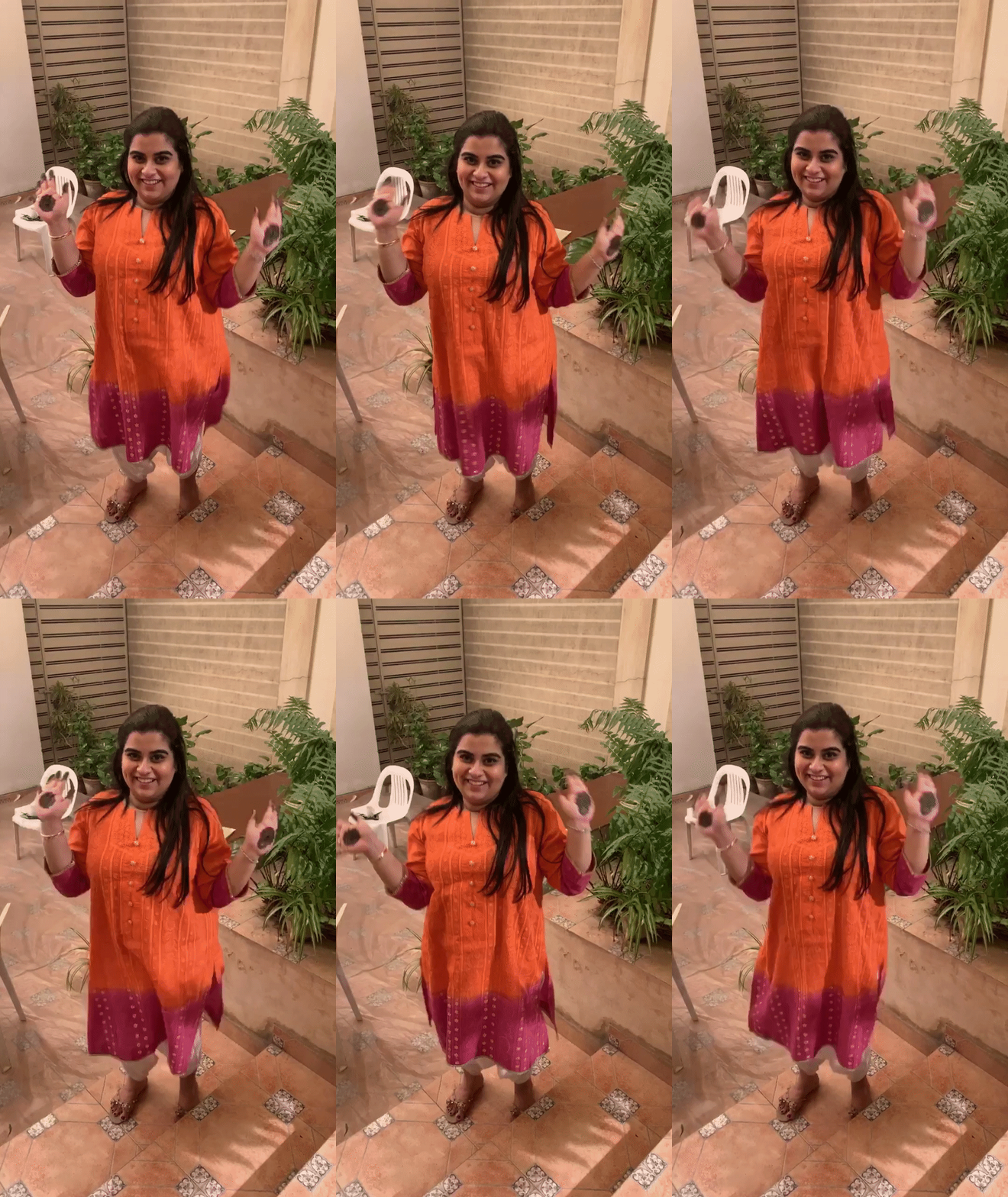
Throughout the dholki, Bollywood music is playing. At a certain point, the elder women of the family get together in a circle and play the dhol (Indian Drum) and tambourines to old traditional Bollywood wedding songs. The youngsters also chime in and join the fun.
You need to dress for this occasion according to the size of the event. If it’s small casual one, you can even get away with wearing western casual clothes but if it is big you would need to wear eastern semi formal wear. The dholki’s usually get bigger closer the wedding dates.
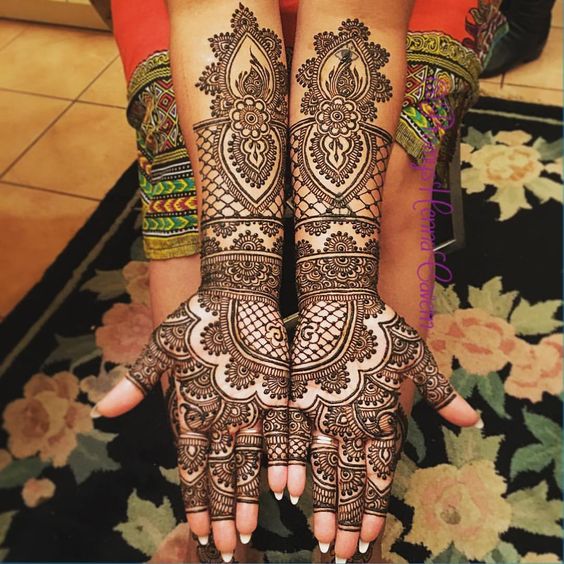
The Mehndi Lagayi is an event where all the women come together and apply henna on their hands in order to celebrate the wedding. The house is decorated in beautiful flowers, the bride is dressed super simple as it is her last couple of days before she is known as a married woman. The bride usually applies henna all the way up to her elbows and puts it on her feet as well. In henna design, the artist leaves the initials of the groom and as per tradition, the groom is supposed to find it on his wedding night.
Bridal Henna
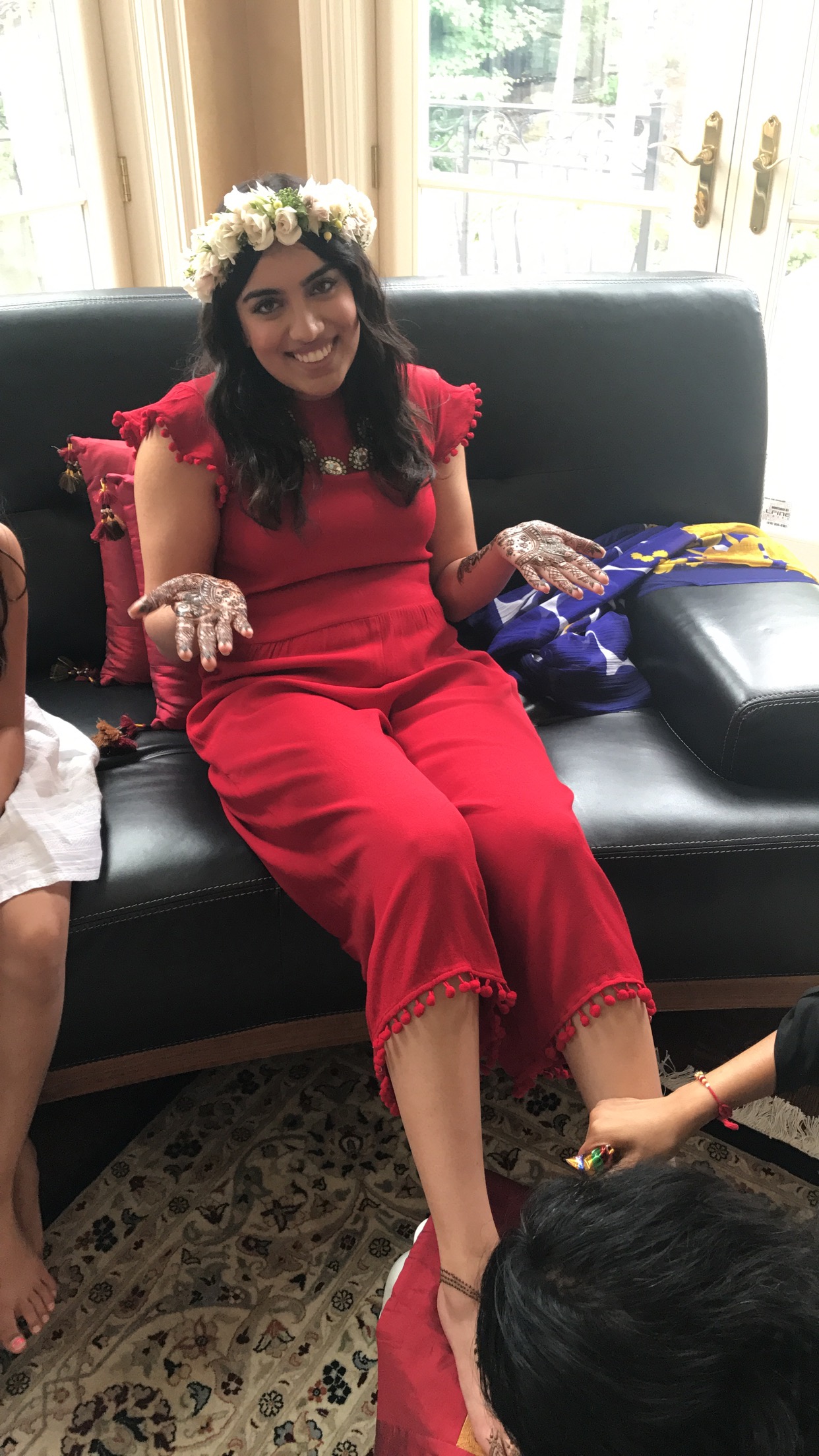
Other close family members and friends apply mehndi on all four sides of their hands and some even apply it on the feet.
My cousin applying her mehndi on her feet!
To this event, you would definitely wear something eastern but not too fancy. At this event the traditional dish daal chawaal (yellow lentils with rice) is served as it is simple, easy to eat and delicious along with other traditional Pakistani sweets.
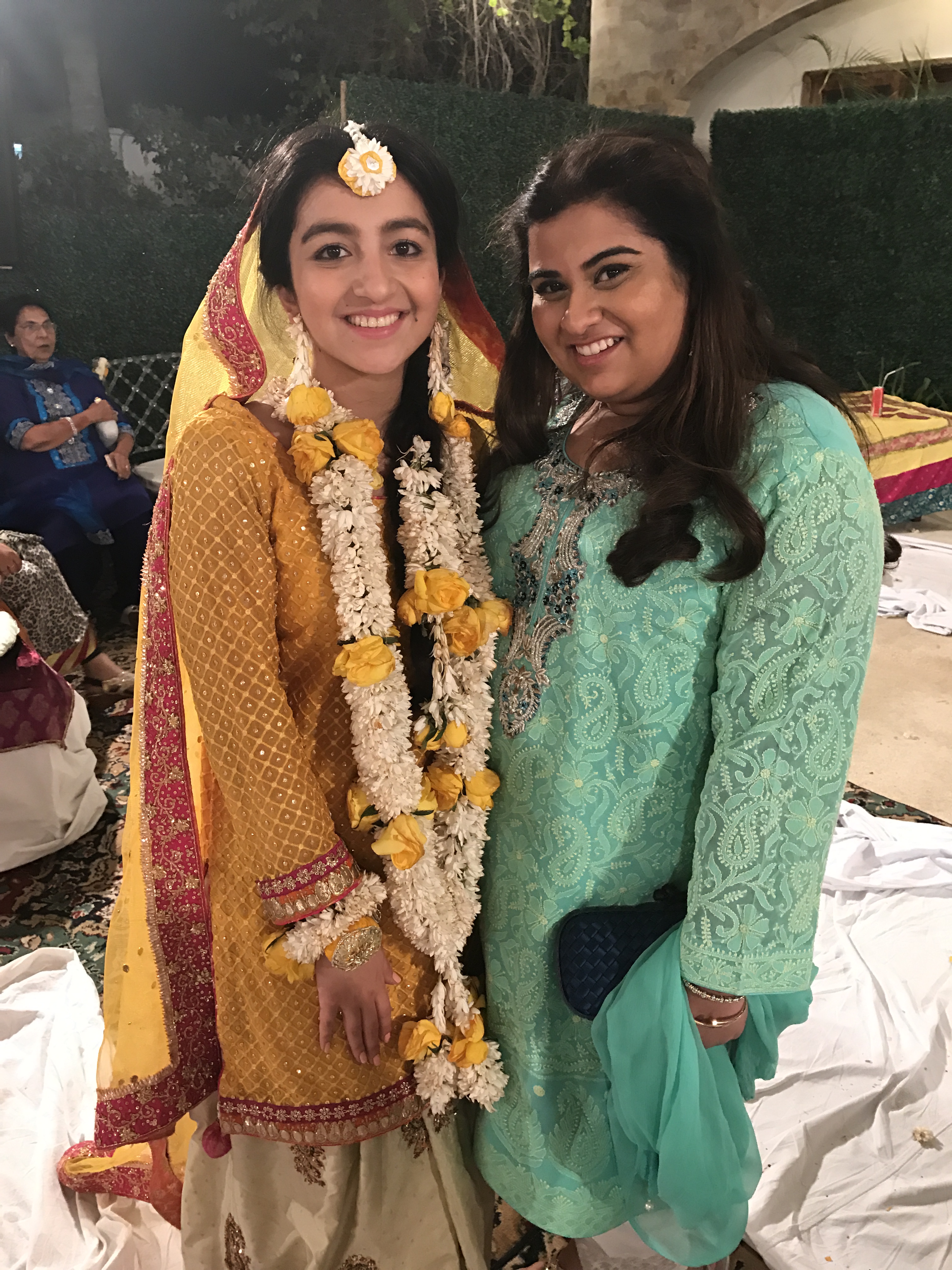
The second event that takes place is the mayun. The mayun is an ubtan ceremony where the bride and groom are covered in a tumeric paste to make their complexion glow. The bride and groom are fed some traditional Pakistani sweets known as mithai. To this event, you should opt to wear yellow or orange as that is the color that represents the paste. After the traditions are done. The boys friends take the groom and throw eggs and other items on him. This tradition is called a pithi.
The milad is the first event that takes place at a Pakistani wedding. This event is for women only where women from both sides come together to offer prayers and blessings to the new bride. Islamic chants are performed and all the women come together and pray for the the couple.
The bride is dressed quite simply, and as a guest one should dress simply too. To a milad, I would opt to wear an outfit with pastels rather than go for something dark and loud as it will take away from the entire aesthetic.
This is the brides entrance to her Milad.
After the prayers are over, the men will come and join the women for dinner.
The first part of any wedding around the world is an engagement where the couple are officially getting married. In Pakistani culture, a “Baath Pakki” takes place. A Baath Pakki is when the groom’s side of the family goes to the bride’s house to ask permission for the son to marry their daughter. On this day the groom’s family takes a small token for the bride-to-be to welcome her to their family. The bride’s family is supposed to give a small token to everyone who comes to this event. It could either be money or a small trinket to commemorate this day.
After the baath pakki, the brides family hosts an engagement where they invite close family and friends from both sides. We begin this event by welcoming the grooms family to the venue. Then the bride and groom enter together and sit at the stage. The program begins with a prayer and then rings are exchanged by the couple. Some grooms don’t want to wear an engagement ring and rather wait till the wedding for a bad. So instead the brides family gives him a watch instead. After the rings are exchanged the families congratulate each other and then dinner is served. In recent times, the families provide entertainment by giving speeches, skits or dances.
Hi, I am Emaan Rawji, an international senior student studying at Suffolk University. I have always been extremely passionate about weddings in Pakistan and cannot even count how many of them I have attended. Growing up, I have always been involved in weddings. From close cousins to family friends, I am the go-to person when it comes to planning the perfect Pakistani Wedding. In Pakistan, weddings are the highlight of the year. Whether it’s a family member’s or a close friend – you know you are going to have a great time. In my blog, I will be discussing the various events and traditions that take place in Pakistani weddings. You can use this blog as a guide if you are going to attend a Pakistani wedding!






 Emaan’s Guide to Pakistani Weddings